
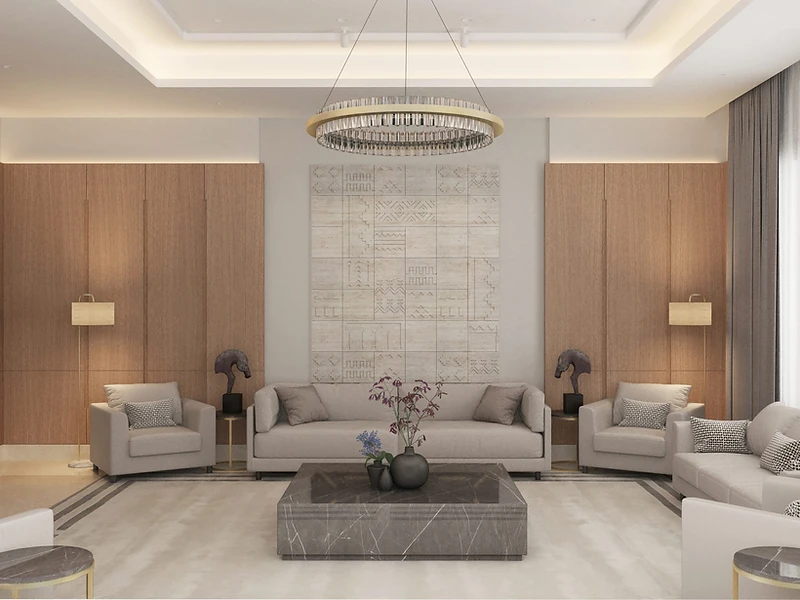
Why Stones Jordan® Keeps Design and Supervision Connected
A project does not stop being a design project when construction begins. The site is where the design is interpreted, materials are installed, and hundreds of small decisions determine whether the final space matches the approved vision.
One team responsible from design to handover.
What Often Happens When Design and Supervision Are Separated. Designer produces concept, Drawings are handed over to contractor, Contractor interprets them independently, Materials are substituted without design context, Site questions are answered without the designer, Owner discovers differences at completion, Corrections become expensive.
What Happens When Design and Supervision Stay Connected. Design team understands the intention, Technical information is prepared for contractor use, Contractor receives clarification when needed, Materials are reviewed against approvals where included, Site issues are reported promptly, Design decisions remain coordinated through execution, Final result remains connected to the approved work.
Designer involvement after drawings. Design only: May end after documentation is handed over, Connected design & supervision: Continues through execution to protect the design intent.
Site questions. Design only: Contractor carries interpretation responsibility, Connected design & supervision: Design team remains available for clarification.
Material substitutions. Design only: May happen without design context, Connected design & supervision: Reviewed against approved design where supervision is included.
Client communication path. Design only: Client may coordinate between separate parties, Connected design & supervision: One point of contact handles design and execution communication.
Site deviations from design. Design only: Identified late, often when correcting is expensive, Connected design & supervision: Identified earlier through scheduled site observations.
Supervision reduces uncertainty and helps identify problems. It does not remove contractor responsibility, guarantee that no delays will occur, or replace specialist inspections required by law.
More About Us
About Stones Jordan®
The company at a glance: who we are and how we work.
Our Story
How years of developing homes shaped the studio.
Our Timeline
The milestones in our growth since 2000.
Our Founders
Two brothers and the vision they share.
Leadership
How the company is led and organized.
Our Team
The designers, engineers and specialists behind the work.
Our Philosophy
The principles behind every decision we make.
Our Process
Ten stages from the first conversation to handover.
Our Standards
Twelve working standards that guide every project.
Why Stones Jordan®
The practical differences our clients experience.
25+ Years of Experience
What long-term site experience brings to a project.
Where We Work
Rooted in Amman, present across eight countries.
Client Experience
What working with us feels like, stage by stage.
Client Stories
Verified experiences shared by our clients.
Remote Clients
Managing your project in Jordan from abroad.
Dabouq Studio
Visit our studio in Dabouq, Amman.
Project Responsibility
Who is responsible for what in a project.
FAQ
Direct answers about the company and its services.
Careers
Opportunities to build thoughtful work with us.