
Best Landscape Design in Amman: Gardens, Terraces and Outdoor Living
A guide to landscape planning in Amman covering use, privacy, shade, circulation, planting, outdoor materials, lighting and maintenance.
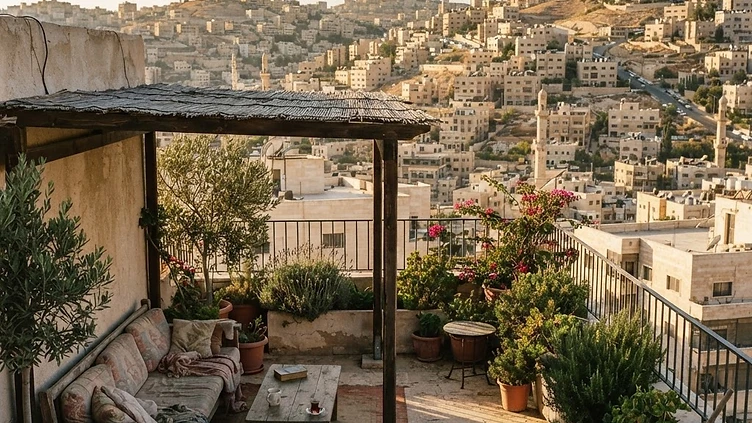
Best Landscape Design in Amman: Gardens, Terraces and Outdoor Living
Amman outdoor spaces carry real potential, yet they are frequently underused. A terrace that bakes in direct sun from June to September, a garden with no shade plan, a roof level with no wind protection: these are common outcomes when landscape design begins with aesthetics rather than analysis. The guide below covers the decisions that matter most for gardens, terraces, roof terraces and pools in Amman's specific climate.
Start with Use, Not Materials
Before any surface is chosen or plant list compiled, map how the space will actually be occupied. Consider:
- Dining outdoors: morning, evening or both?
- Play areas for children and their relationship to supervision sightlines
- Arrival and entrance impression
- Privacy from neighbours or the street
- Service access for cleaning, maintenance and deliveries
- Seasonal shift: which areas will be used in winter, which only in summer?
- Views worth framing and views worth screening
This use-first approach shapes every subsequent decision, from where shade structures go to where drainage must be managed carefully.
Understanding Amman's Outdoor Climate
Amman sits at elevation, which means the city is cooler in winter than many assume and significantly windier than coastal cities in the region. Summers are dry and intense, with direct sun from late morning through late afternoon. Evenings cool quickly, extending the usable season well into October.
Microclimates vary considerably across the city. A north-facing terrace in Khalda will behave very differently from a south-facing garden in Dabouq. Roof terraces face stronger wind exposure than ground-level gardens. These differences should influence planting choices, shade placement and the selection of outdoor furniture and finishes.
For a completed example of how a compact roof terrace in Amman can be transformed, see the Rooftop Terrace Transformation in Khalda project. For a more expansive outdoor composition with pool and garden, the Mediterranean Villa Garden in Amman illustrates how levels, planting and water features can be coordinated on a single residential site.
Stone, Paving and Outdoor Finishes
Stone is the natural material of Amman's built environment and it performs well outdoors when selected correctly. Not all stone is appropriate for external use: thermal movement, water absorption and surface texture for slip resistance all require consideration.
For terraces and pool surrounds, honed or brushed finishes are preferable to polished surfaces. Lighter tones reduce surface heat in summer. Joints and drainage channels need to be integrated from the start rather than resolved after laying, because water pooling on terraces is one of the most common and expensive problems to fix retrospectively.
For ground-level gardens, compacted gravel and local stone edging offer lower maintenance than continuous paved areas while allowing water infiltration, which is relevant given Amman's periodic heavy winter rain.
Planting for the Amman Garden
Water use is a genuine constraint in Jordan. A planting scheme designed around drought-tolerant and Mediterranean species will perform better over time than one that replicates lush green gardens from wetter climates. Rosemary, lavender, olive, carob, jasmine, bougainvillea and native ground covers all establish well and require significantly less irrigation once mature.
Trees should be chosen for their eventual size, canopy shape and root behaviour near paving or pool structures. Fast-growing trees are tempting but can create maintenance problems and structural conflicts within a few years. Slow-growing native and adapted species are worth the patience.
Irrigation systems should be zoned by plant type and solar exposure. Drip irrigation directed at root zones rather than surface spray reduces water loss substantially and keeps foliage dry, which reduces fungal problems in summer.
Pools, Water Features and Outdoor Kitchens
A pool changes how an entire garden is used. Its orientation relative to sun, the depth and position of shaded seating nearby, the surface of the surrounding deck and the acoustic quality of any water feature all affect daily experience.
In Amman, pool water temperature extends the swimming season from roughly May through October. Pool covers reduce evaporation and heating costs. The relationship between the pool edge, garden planting and terrace levels requires early coordination because structural and waterproofing decisions are very difficult to change later.
Outdoor kitchens and dining areas gain substantially from wind protection. A pergola, planted screen or low wall on the prevailing wind side makes evening use comfortable for a much longer part of the year. The House Renovation in Madaba: Pool and Outdoor Kitchen is a completed project that shows how pool and kitchen functions can be integrated within a single renovated garden.
Lighting, Irrigation and Long-Term Maintenance
Outdoor lighting should do two things: support safe movement at night and reveal the garden's character after dark. It should not attempt to replicate daylight. Uplighting on trees, low path lighting and subtle illumination of water features tend to produce better results than floodlighting large areas from above.
All lighting and irrigation infrastructure should be installed before final paving and planting. Retrofitting conduit under stone paving is disruptive and costly. This requires a coordinated programme between landscape, electrical and irrigation contractors working from the same set of drawings.
Long-term maintenance capacity should be realistic when design decisions are made. A complex planting scheme with high water demand and frequent pruning requirements is only sustainable with consistent professional maintenance. Simpler schemes with robust plant choices often look better after five years than ambitious schemes that are not properly maintained.
How Stones Jordan Works on Landscape Projects
Stones Jordan® has been designing residential and commercial spaces from its studio in Dabouq, Amman since 2000. Landscape work includes garden design, roof terrace design, pool and outdoor living and garden renovation. Site supervision in Amman involves scheduled visits, material checks and contractor coordination; construction is carried out by professional contractors.
Many clients managing Amman projects from the Gulf follow progress through a single point of contact, with photo and video updates and documented decisions at each stage.
The process begins with a first conversation and site assessment, moves through design and space planning, finishes and materials selection, supervision and coordination, and concludes with styling and handover.
To discuss a garden, terrace or pool project, book a free first consultation. There is no obligation and no fee for the initial meeting.